

Mission creep: FIFA’s embrace of technology backfires in controversy-riven World Cup
MIAMI, July 10 (Reuters) – If FIFA President Gianni Infantino imagined his embrace of technology might finally put an end to disputes over refereeing decisions, the World Cup would have disabused him of the notion.
The use of technology has been at the heart of every major controversy at the tournament, including the saga around the red card for Folarin Balogun that drew in U.S. President Donald Trump.Criticism of technology has ranged from charges of over-reach and inconsistency of application, to full-blown conspiracy theories that VAR was being used to determine the outcome of matches in favour of certain teams or players.
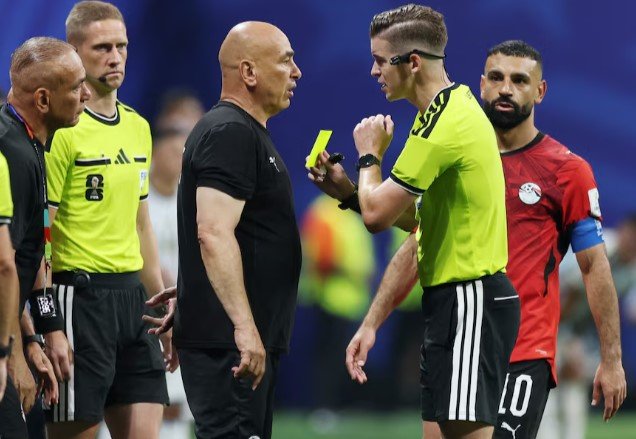
Egypt coach Hossam Hassan gave voice to all three on Tuesday after his team had a goal scratched off by VAR because of a foul at the other end of the pitch, and a penalty shout that went unchecked, before losing 3-2 to Argentina in the last 16.
“What’s happening isn’t fair,” he said.
FIFA referees’ chief Pierluigi Collina said in an interview on Wednesday that he was happy with how things were going and in particular defended the decision to disallow the Egypt goal for a foul in the lead-up.
“There is no defined limit regarding either the distance from goal or the amount of time between the incident and the goal,” he wrote.
“We believe that a foul is a foul. Regardless of whether the foul appears ‘obvious’, if the referee did not see it on the field of play, the VAR can intervene.”
The Video Assistant Referee (VAR) was initially developed as a remedy for “clear and obvious” refereeing mistakes such as Diego Maradona’s famous ‘Hand of God’ handball goal against England in the 1986 tournament.
The introduction of VAR at the World Cup was resisted by Sepp Blatter when he was FIFA president but it was quickly adopted by Infantino when he took over the job in 2016.
There were 20 VAR interventions in 64 matches at the 2018 World Cup and fewer than 30 in the same number of games in Qatar in 2022, but those numbers were quickly dwarfed in the early stages of the 2026 tournament, which will have 104 matches.
In collaboration with the International Football Association Board (IFAB), the custodians of the rules of the game, Collina introduced four more areas where VAR could intervene.
Network scientist Brennan Klein said a future where a panopticon of cameras and AI adjudicated the match in real time, while possible, was unlikely simply because fans had already reached their limit.
“This kind of dystopian future of over-refereeing everything kind of fails to address what it’s originally designed to intervene on,” Klein, who with his team at Northeastern University has been analysing data throughout the tournament, told Reuters.
“My sense is that fans in the stadium, by and large, just hate this. They’ve sort of been informed that this is the right way to do things, but not really had a say in it.





 Loading ...