

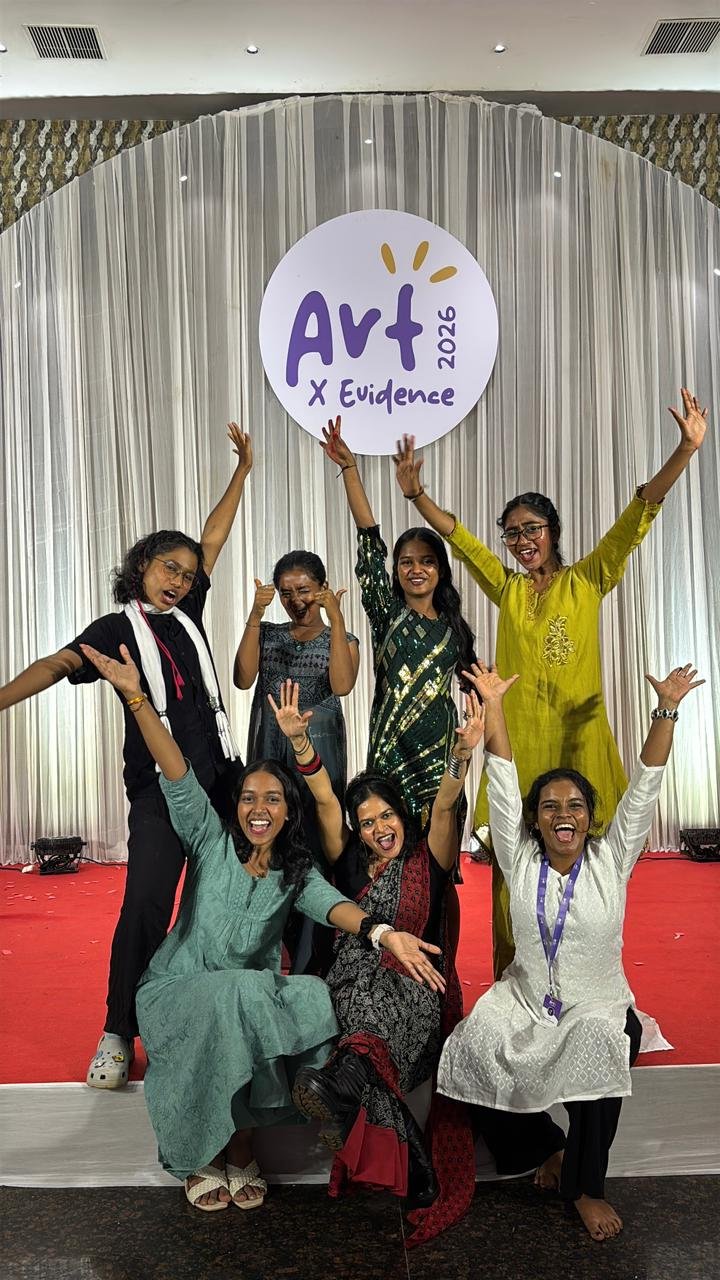
45 Goa students explore career pathways through Art × Evidence; Goa SCERT engagement strengthens career education efforts
Goa, 6 April, 2026– 45 young participants from across Goa used art to interpret and express their experiences of career decision-making, financial pressure and early work transitions at Art × Evidence, an initiative by Antarang Foundation, building on its work with the Goa State Council of Educational Research and Training (SCERT) to strengthen career education across government and aided schools in the state.
Working across mediums including visual art, dance, writing, theatre and textile craft, participants responded to research themes on the transition from education to employment. Their work was presented on 27 March 2026 at Clube Tennis Gasper Dias, Panaji to a curated audience of educators, institutional leaders and employers.
The participating youth are part of Antarang Foundation’s career education programmes implemented in partnership with Goa SCERT, through which students across government and aided schools receive structured exposure to career pathways and decision-making frameworks. The initiative reflects the state’s continued focus on ensuring that students are aware of both current and emerging opportunities.
India is home to over 371 million young people, yet many continue to face challenges in accessing stable employment. While data highlights these trends, Art × Evidence focuses on what those transitions look and feel like for young people navigating them.
“Art × Evidence created a space for young people to express what the transition from education to work actually feels like – beyond data, into lived experience,” said Priya Agrawal, Founder and Director, Antarang Foundation. “What emerged were not just individual stories, but a set of possibilities for how we can build stronger bridges between education and employment and design more responsive pathways for young people.”
These insights also feed into Samagam, a conclave in Mumbai where the Foundation’s decade-long research findings will be shared with a group of stakeholders across policy, education and industry.
“Creating my piece helped me reflect on my journey in a more honest and personal way,” said Amey Shetye (25), Visual Artist. “It made me realise how many of my decisions were shaped by expectations and uncertainties I hadn’t fully expressed before. Through this process, I was able to recognise that personal experiences can contribute meaningfully to larger conversations.”
“Before this, I never thought about how my education connects to what I want to do in the future,” said Jeeya (18), Dance Participant. “Through dance, I was able to express my confusion, pressure and passion. It helped me realise that my journey is not just about studies, but also about what I truly enjoy and want to become. Now I feel more confident that my voice matters and deserves to be heard.”
“What stood out was the depth and clarity with which young people are thinking about their futures,” said Andria Alfonso, Mentor (Crochet). “They are not just looking for jobs – they are looking for agency, adaptability and meaning. The transition from school to work is no longer linear, and our systems need to reflect that.”
The event brought together 161 attendees, including educators, institutional leaders, employers and members of Goa’s civic and creative ecosystem. Dr. Gopal Chandra Pradhan, Associate Professor, GOA SCERT was present at the convening, engaging with student work and perspectives.
“The room was energised by genuine curiosity and engagement,” said Insia Lacewalla, Project Director, Art × Evidence Goa. “By the end of the evening, several attendees initiated conversations around collaboration and future opportunities for young people across disciplines.”
Keith Menon, Founder of Spiro Spero, an art, architecture and interior design studio and the Co-Founder of Circle Goa, a boutique hotel, said:
“Ground activations like Art × Evidence help teams like ours engage more closely with communities at a grassroots level. Seeing the talent at the event, and the need for alternative career pathways, makes it meaningful to be able to offer support and opportunities.”





 Loading ...