

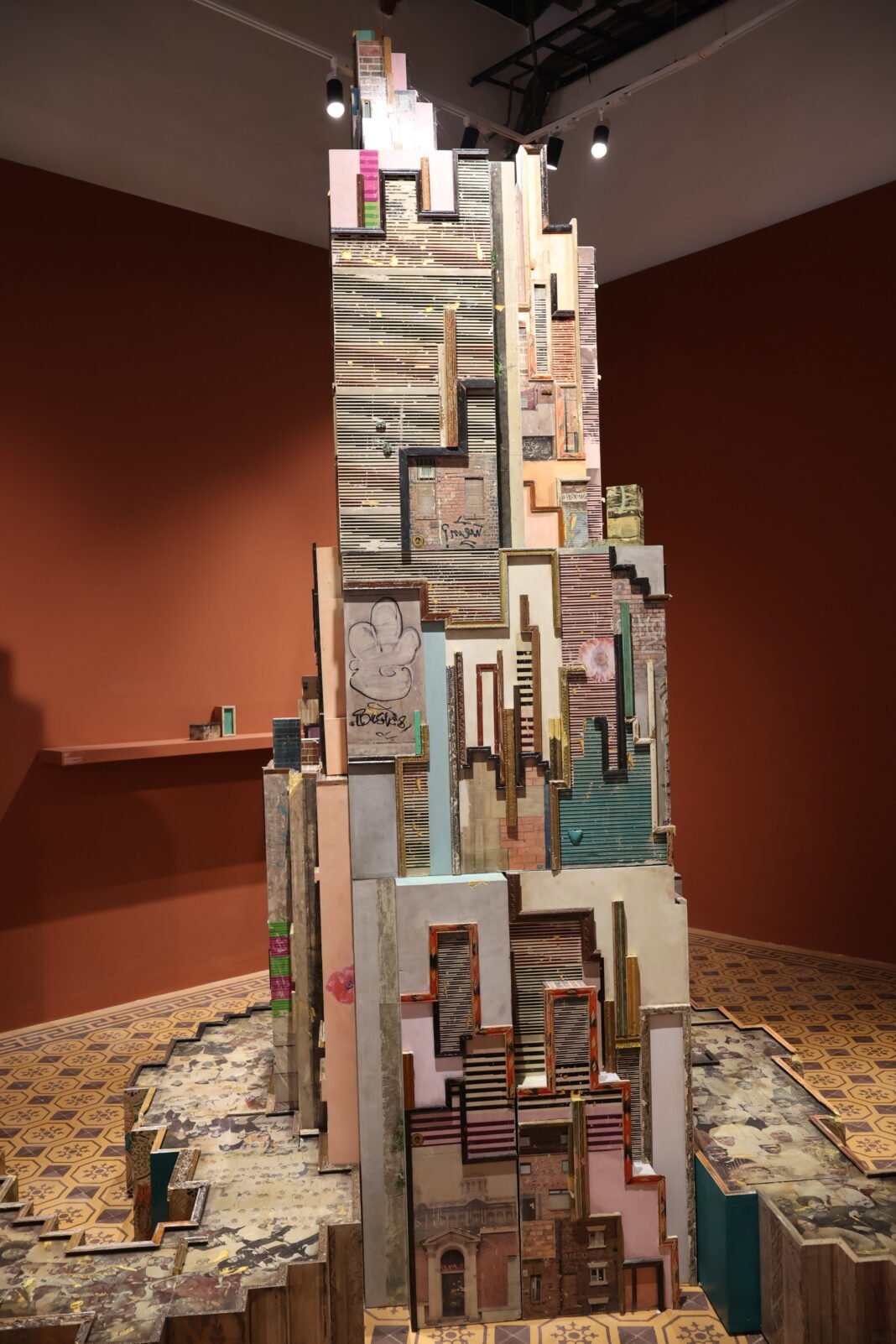
Migration and displacement find expression at the Serendipity Arts Festival
~ Curator Rahaab Allana spotlights the ‘human’ behind the refugees and asylum seekers across South Asia and the Gulf with an exhibition that questions the idea of ‘Displacement’.
Panaji, December – Last year, the world witnessed some of the biggest migration trends in recent history, between Europe and the Middle East, according to art historian Rahaab Allana. Allana is one of the curators at the 10th edition of the Serendipity Arts Festival (SAF), where he has curated the exhibition titled, ‘Displacement’, which is open to viewing at The Old PWD Complex.
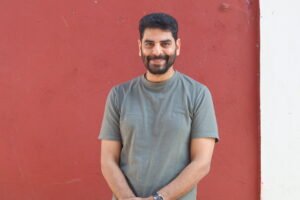

“A hundred million people were displaced over last year, 2024. That’s a record in history. Whether it was Syria, whether it was Iraq, whether it was Palestine or Afghanistan, there’s been a lot of displacement,” said Allana, who observed that within the South Asian region too, there was a lot of internal displacement, be it Myanmar citizens coming to India or Indians going to Sri Lanka. He added that difficult transitions, racism and India’s minority-majority debates shaped his effort to connect local experiences with global realities.
The exhibition, which boasts works of artists across South Asia and the Gulf region, throws open contemporary image-oriented debates in today’s volatile landscape. According to Allana, these works acknowledge the fact that while countries are at war and there’s a constant hatred, paranoia and territorial dispute, “at the end of the day, there are people, human beings being affected. It’s a humanist ideal to focus on these issues right now, and I think art is a very important provocation of a dialogue about these very important pivotal issues,” says Allana.
Speaking about the works in the exhibition, he says they all come from the experiences of the artists, most of whom are living in exile and seeking asylum in countries far from their origin. “I think all the artists are speaking to some form of internal or external shift, with an idea of rupture and the idea of severance. But at the same time, there’s the idea that art can create a way of expressing that, bringing community together. Also allowing them, as people in exile, to create a community while they are in exile via their art,” he says.
There are several works that speak of the experiences, be it the work of Afghan artist Hadi Ranaward, who sparks conversations revolving around territory and spatiality. “Hadi has a map of Kabul that has small origami planes and helicopters that hover above. They cast an incredible shadow of scrutiny and surveillance over the humans who live in that area and how they are constantly surveyed,” says Allana, citing the work of one artist from his curated exhibits.
Trained in art history and photography, Allana has long focused on decolonising visual narratives through curatorial practice, which comes to the fore at the ongoing SAF 2025.
“These (artists) are not people who are trying to shut the door. They’re trying to open the door. They want people to ask them questions. They want to ask questions of people. And I think that’s a very positive thing that this exhibition is trying to communicate in the end,” he says.




 Loading ...